Why the Best Tropical Homes Are Planned Around Light, Not Layout
Most clients arrive with floor plans already formed. Our first move is to set those aside and spend a week studying the sun. In tropical climates, light is the architecture.
A client arrives with a floor plan already sketched out, living room facing the hinterland for the view, master suite with western glazing to catch the sunset. It's a generous plan, carefully considered. And on exposed coastal sites, badly oriented windows will punish you daily.
We often spend the first week studying sun angles before we've drawn a single wall. In tropical and subtropical Queensland, orientation isn't a bonus feature or a finishing touch. It is the primary constraint around which everything else must be choreographed. The homes that age best are those planned around light quality before floor plan, not because the principle is radical, but because the consequences of inverting that order are immediate and irreversible.
This isn't about theory. It's about what happens at 4pm on a February afternoon when your western-facing living room becomes unusable. Or what it feels like to wake in a south-facing bedroom that never sees direct sun. Climate reveals poor decisions faster than almost anything else in residential design.
The western view problem, and the eastern exposure trap
On the Sunshine Coast, the hinterland is west. The Glass House Mountains, the rainforest escarpment, the afternoon sky streaked with colour, all of it lies to the west. And the afternoon heat-load in subtropical Queensland comes from exactly the same direction.
Clients are frequently surprised by how much the 4pm sun shapes comfort. Western glazing in a tropical climate isn't just warm, it's structurally problematic. The low-angle afternoon sun penetrates deep into rooms, heating thermal mass, overwhelming air movement, and rendering spaces uncomfortable for hours after the sun has set. No amount of air conditioning compensates elegantly for poor orientation.
The ocean, conversely, is east. Sunrise over the Pacific, morning light off the water, the north-easterly sea breeze in summer. East-facing living spaces receive gentle, diffused morning sun and remain thermally stable through the afternoon. The trap is assuming that all glazing is equal, it is not. A wall of glass facing east is a climate asset. The same wall facing west is a liability that compounds daily.
What we've learned is that view and orientation must be negotiated, not assumed to align. If the best outlook is west, you design for glimpses, framed openings, shaded terraces, calculated apertures, rather than floor-to-ceiling exposure. The view remains; the thermal penalty does not.
Why light must lead layout
Most residential briefs begin with a programme: three bedrooms, open-plan living, separate studio, double garage. The impulse is to arrange those rooms on the site according to access, privacy, and view. It's logical, and it's the wrong starting point.
In the southern hemisphere, north-facing rooms receive desirable winter sun throughout the day. South-facing spaces get soft, indirect light, cooler, more even, but without the warmth that makes a living room feel inhabited in July. If you plan the layout first and assign orientation second, you're almost guaranteed to place the kitchen on the south or the bedroom on the west, and both will feel wrong from day one.
We begin differently. We map the sun's path across the site at solstice and equinox. We note where morning light arrives, where afternoon heat accumulates, which elevations will need the most shading. Only then do we begin to assign programme to orientation. Living spaces drift toward the north and east. Bedrooms that don't require morning sun can sit south or west, provided they're insulated and shaded appropriately. Service spaces, laundries, garages, storage, become thermal buffers on the west.
This is something we feel strongly about: spatial planning is not a neutral grid into which rooms are dropped. It is a climate strategy made visible. When light leads layout, the house breathes differently. Rooms feel occupied at the right times of day. Energy loads flatten. The need for mechanical intervention decreases, not because of expensive systems, but because the building itself is doing what it was designed to do.
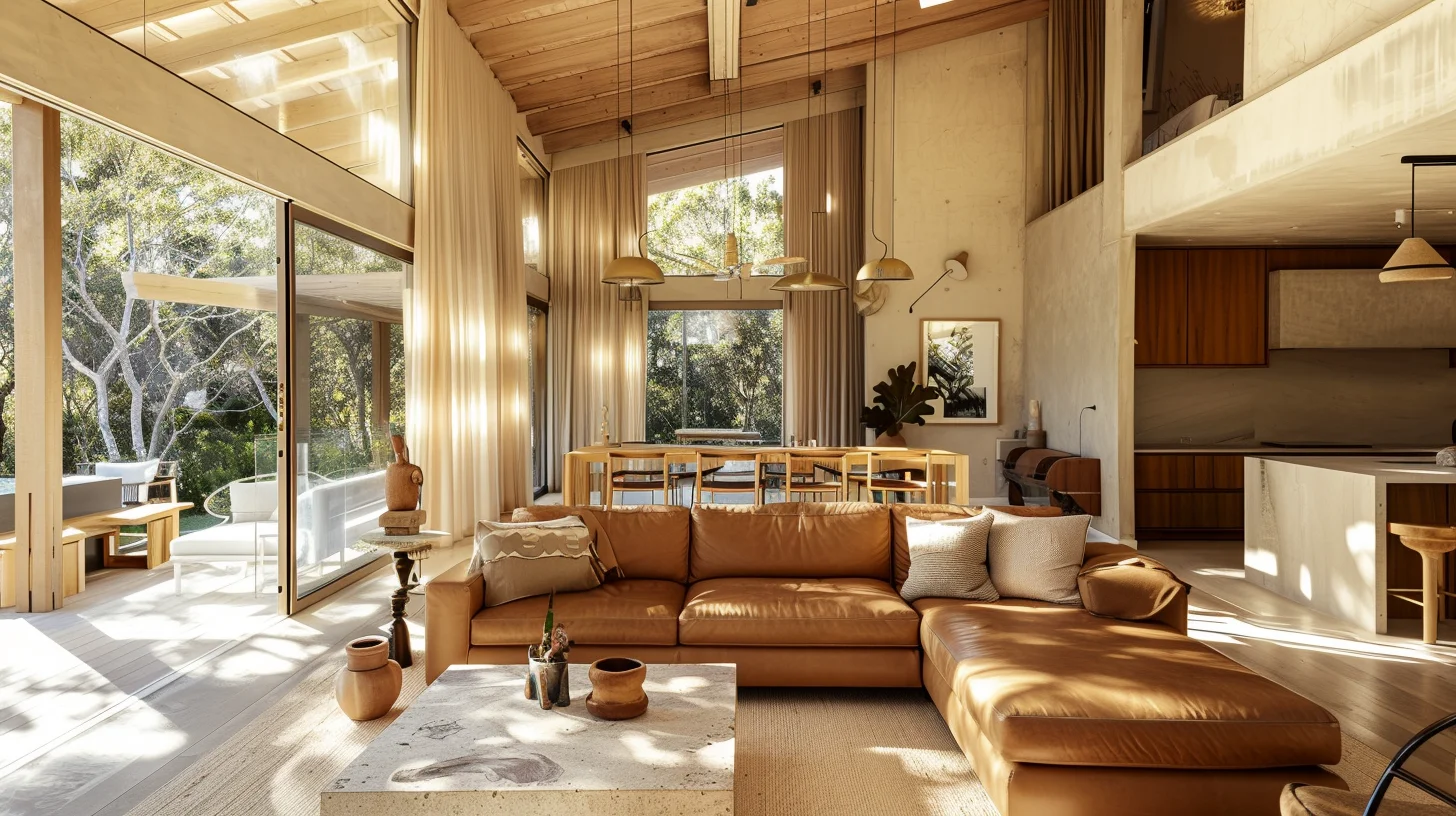
Morning sun versus afternoon heat: the asymmetry no one warns you about
There's a common misunderstanding that east and west exposures are thermally equivalent, symmetrical problems requiring symmetrical solutions. They are not.
Morning sun, arriving from the east, strikes the building when ambient temperatures are still cool and thermal mass has not yet absorbed heat. A bedroom or kitchen receiving east light from 6am to 10am gains warmth without penalty. By the time the sun has moved off that façade, the day's heat has arrived, but the glass is already in shade.
Afternoon sun, arriving from the west, strikes the building at the hottest part of the day, when the air is already warm, when thermal mass has been absorbing heat for hours, when the cooling sea breeze has not yet arrived. Western glazing doesn't just admit light; it admits cumulative heat that persists well into the evening. The asymmetry is structural, and it reshapes the entire building strategy.
On sites where western exposure is unavoidable, corner blocks, narrow allotments, hinterland properties with valley views to the west, we treat that façade as a shading problem first. Operable timber screens, deep verandahs, planted trellises, recessed glazing behind masonry fins. The language is varied, but the intent is consistent: intercept the light before it enters the building envelope.
On orientationEast-facing living spaces remain thermally stable through the afternoon. The same wall facing west compounds heat daily.
Mike Nowson · Atelier Terra
Deep eaves and overhangs: function first, aesthetic second
The deep eave is one of the most honest expressions of climate-responsive design, and one of the first details to be eroded when budgets tighten or aesthetics drift toward minimalism. This is a mistake.
An eave is not ornament. It is a solar calculator made permanent. In subtropical Queensland, summer sun is high; winter sun is lower. A correctly dimensioned eave, typically 1200mm to 1800mm on north-facing glazing, permits winter sun to penetrate deep into living spaces while excluding the high summer sun entirely. The depth is calibrated to latitude and window height, not to proportion or taste.
On east and west elevations, where the sun strikes at lower angles regardless of season, eaves alone are insufficient. We combine them with adjustable louvres, external blinds, or landscaped screening, deciduous vines in some cases, though the subtropical palette limits species. The principle remains: shading must be external, operable where possible, and designed for the specific solar geometry of that wall.
What few discuss openly is that deep eaves also extend the life of the building fabric. Timber cladding, render, window seals, all degrade faster under direct UV and driving rain. A generous overhang reduces maintenance intervals, delays repainting, and keeps water away from junctions where it does the most damage. The aesthetic is a byproduct. The function is climate and longevity.
Glazing strategy when the site won't cooperate
Not every site aligns neatly with solar geometry. Narrow blocks, steep slopes, neighbouring buildings, protected trees, each constraint narrows the window for ideal orientation. The question is not whether to compromise, but how to compromise intelligently.
We've worked on coastal sites where the only viable living zone faced west, toward the hinterland view. The solution was not to abandon glazing, but to treat it as a curated aperture rather than a wall of glass. High-level clerestory windows brought diffused western light without direct heat gain. A colonnade of spotted gum posts carried a deep verandah, creating a thermal buffer between exterior and interior. Full-height glazing was reserved for the southern corner, where indirect light and cross-ventilation could be drawn through without penalty.
On hinterland properties where north-facing slopes are rare, we've carved living zones into the hillside and used earth-sheltering on the west and south to stabilise internal temperatures. Glazing is concentrated on the east and north, where the site permits it. Service spaces and circulation become the thermal mass on the less favourable orientations, thick masonry walls, minimal openings, insulated where necessary.
The honest answer is that some sites are thermally harder than others. What changes is the intensity of the response, not the principle. Orientation always leads. When the site resists, you design around that resistance with more intention, not less.
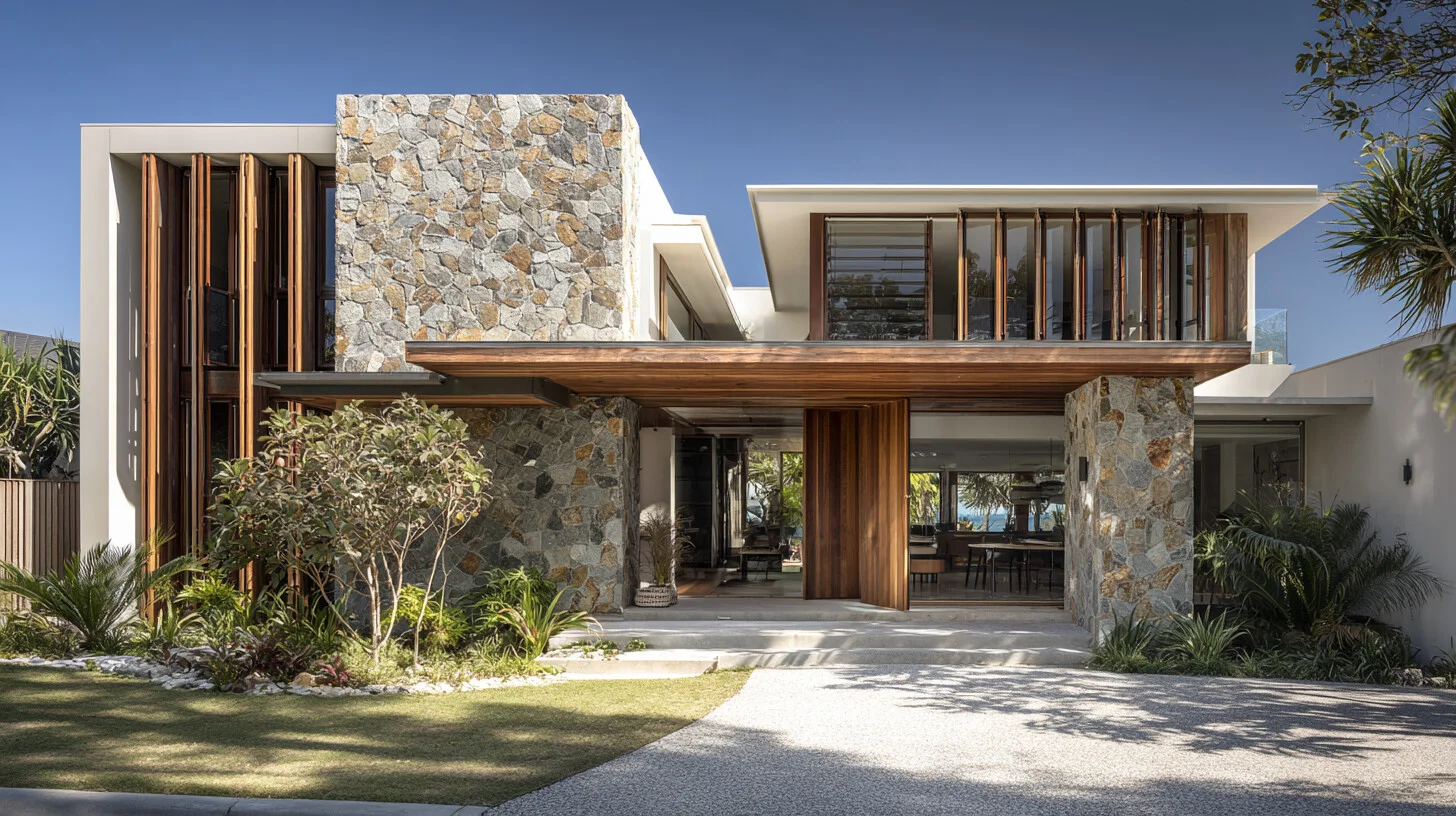
What Mediterranean and Balinese architecture understood instinctively
Vernacular architecture in hot climates converges on similar solutions, regardless of geography. Thick walls, small high windows on sun-exposed elevations, courtyards that draw air through the plan, deep loggias that create layered thresholds between inside and outside. These are not stylistic choices. They are climate responses that evolved over centuries of observation.
Mediterranean builders understood thermal mass and night-time cooling. Balinese architecture understood that the wall does not need to be solid to be effective, woven screens, carved stone panels, and planted thresholds all moderate light and air without sealing the building. Both traditions prioritised cross-ventilation and external shading over mechanical systems, because those systems did not yet exist.
In our recent work on coastal and hinterland sites, we often return to those principles, not to replicate the aesthetic, but to learn from the logic. A masonry wall on the western boundary becomes a thermal buffer and a privacy screen simultaneously. A series of operable timber panels allows a room to be opened entirely to the north-east breeze or closed against afternoon glare. A central courtyard, open to the sky, draws cool air through the plan at night and exhausts warm air during the day.
The materials are local, Australian hardwoods, off-form concrete, natural stone, but the thinking is ancient. Climate-responsive design is not an innovation. It is a recovery of what was once common knowledge.
The throughlineClimate-responsive design is not an innovation. It is a recovery of what was once common knowledge.
Mike Nowson · Atelier Terra
Homes designed with time of day in mind
The best residential architecture accounts for how a building will be inhabited across the day, not just how it will photograph at completion. A kitchen that receives morning light feels fundamentally different from one lit only in the afternoon. A study that catches the last hour of daylight supports evening work in a way that artificial light cannot replicate. These are small calibrations with large consequences.
We've observed that clients live differently in homes where light has been choreographed with intention. Mornings begin in east-facing zones, the kitchen, the breakfast terrace, the main bedroom. As the day progresses, activity drifts north, where light remains even and comfortable. Evenings settle into spaces with western aspect, but only where those spaces are shaded and insulated enough to remain thermally stable. The plan becomes a temporal sequence, not a static diagram.
This is something we feel strongly about: good architecture is not experienced all at once. It unfolds across hours, seasons, years. A home designed with time of day in mind rewards daily occupation in ways that become invisible, which is to say, they feel natural. You stop noticing the eave depth or the window placement, and you simply notice that the house feels right at 7am and again at 6pm.
That quality of rightness is not subjective. It is the result of deliberate, climate-led decisions made early. It is what happens when orientation precedes layout, when light leads form, when the sun's path is understood as the primary constraint, not an afterthought to be managed with blinds and air conditioning.
If you're planning a home on a coastal or subtropical site, the question is not whether to account for solar orientation. The question is whether to account for it early enough that the architecture can respond gracefully, or late enough that you're left compensating for decisions already made. The difference is permanent.